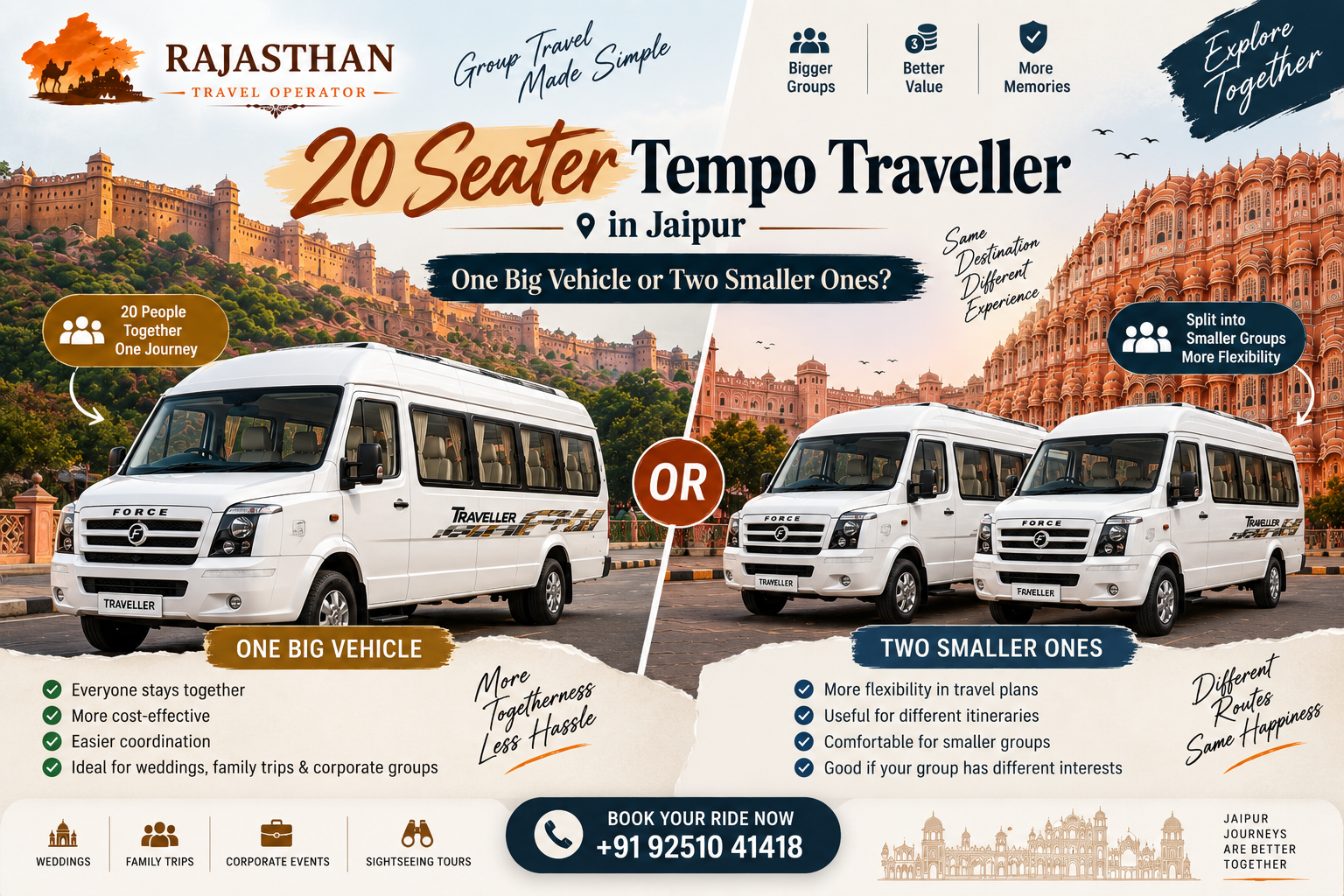
The Decision Nobody Actually Sits Down and Runs the Numbers On
For a group of eighteen to twenty, the choice usually isn’t between different vehicle types — it’s between one large vehicle and two smaller ones covering the same group. Most people default to whichever option they thought of first, without actually comparing cost, coordination, and comfort side by side. This is that comparison, run properly, so the decision isn’t a guess.
The Cost Comparison, Done Honestly
A single 20 seater tempo traveller costs more per day than a smaller vehicle, but it’s one driver, one fuel cost, one set of tolls and permits, and one night halt charge rather than two of each. Splitting the same twenty people across two vehicles — say, a tempo traveller 12 seater and a tempo traveller 17 seater, or two mid-size vehicles — means doubling nearly every cost layer: two driver allowances, two night halt charges, two sets of toll and permit costs, and two base rentals instead of one.
For a genuinely confirmed group of eighteen to twenty on a multi-day, multi-city trip, the math very often favours one large vehicle. The exception is a short, local, single-day booking where the cost gap narrows and coordination matters less — in that specific case, two smaller vehicles can come out close to even, sometimes even cheaper, especially if the group naturally splits into two logical sub-groups anyway.
The Coordination Comparison
One vehicle means one departure time, one arrival time, and zero risk of the group getting separated at a toll plaza, a rest stop, or a confusing turn on an unfamiliar highway. For a family trip, a pilgrimage circuit, or any group travelling together for a shared purpose, this alone is often worth more than the cost difference — nobody spends part of the trip on the phone trying to figure out where the other vehicle is.
Two vehicles introduce real coordination overhead: two drivers who need to communicate, two potential points of delay, and a genuine risk of the group splitting up if one vehicle stops for fuel or a bathroom break and the other doesn’t. This isn’t a dealbreaker for every trip, but it’s a real cost that doesn’t show up on the invoice — the mental overhead of managing two moving parts instead of one.
The Comfort Comparison
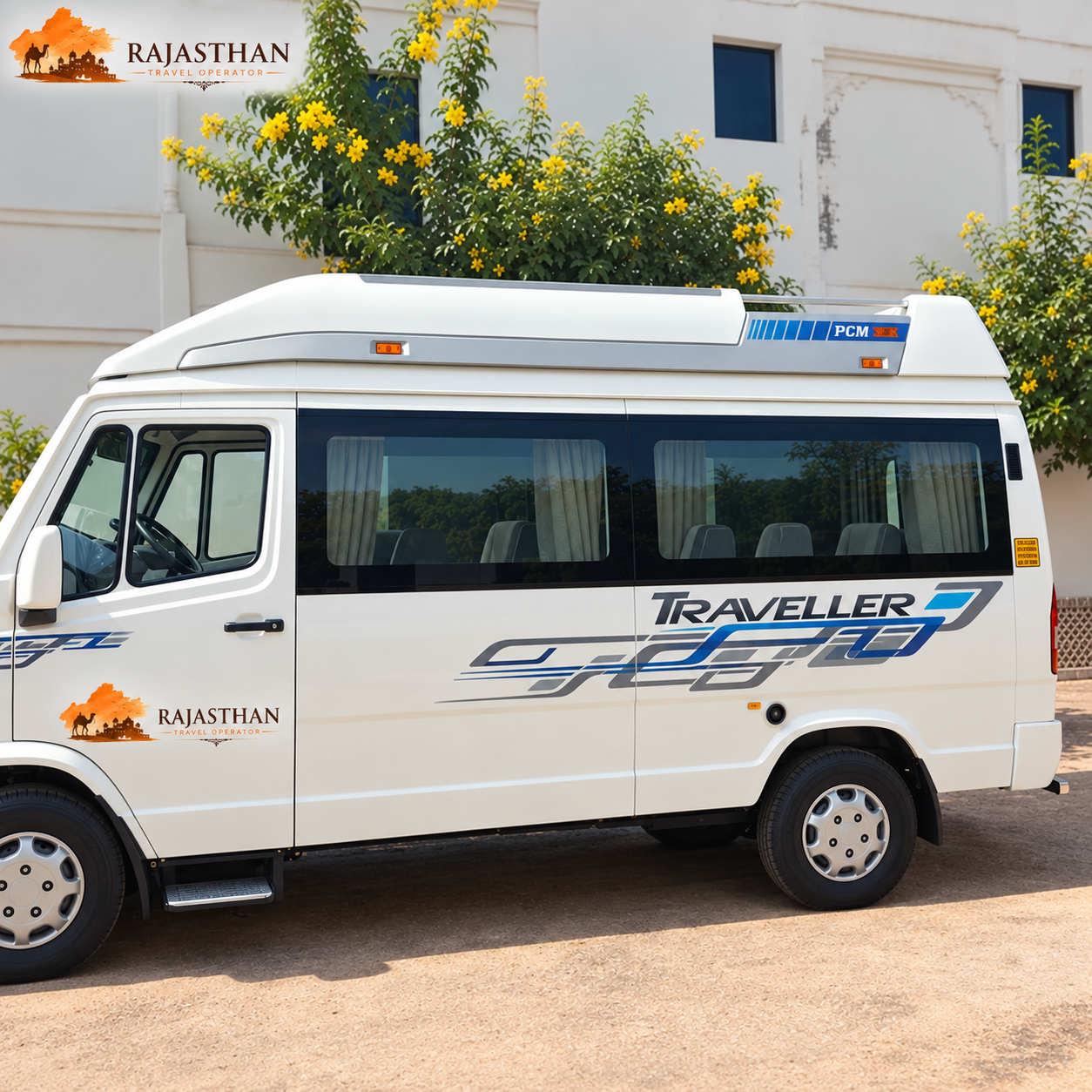
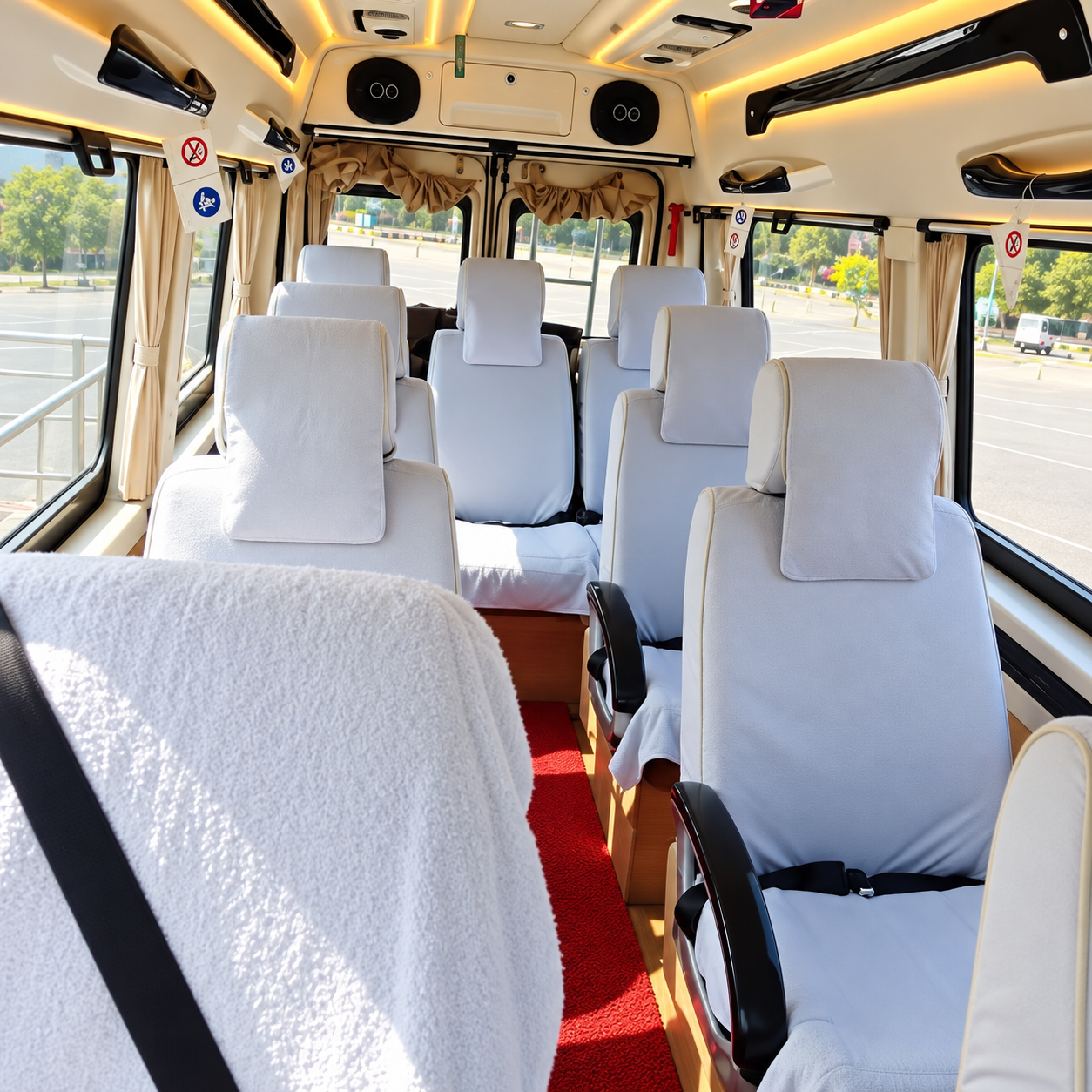
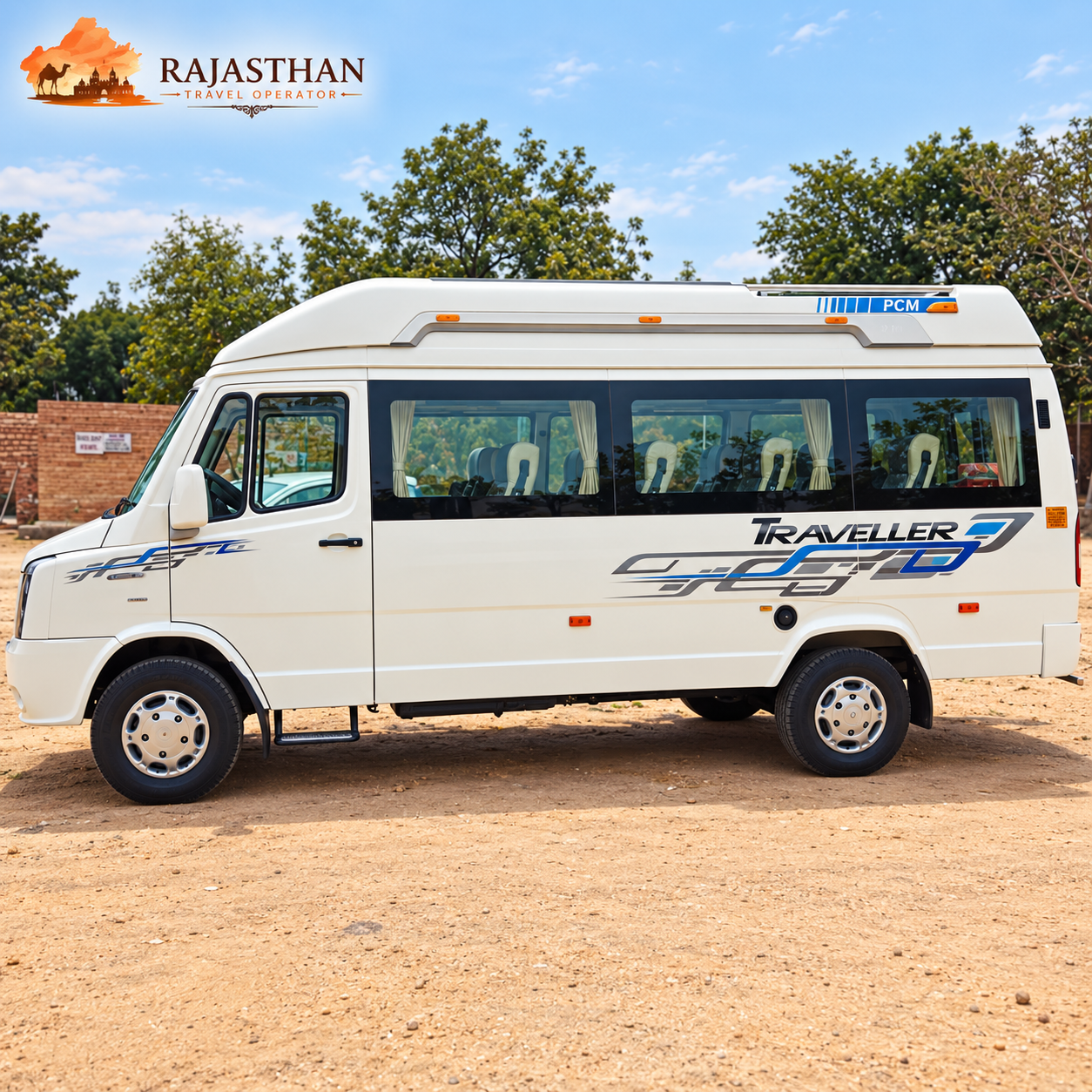
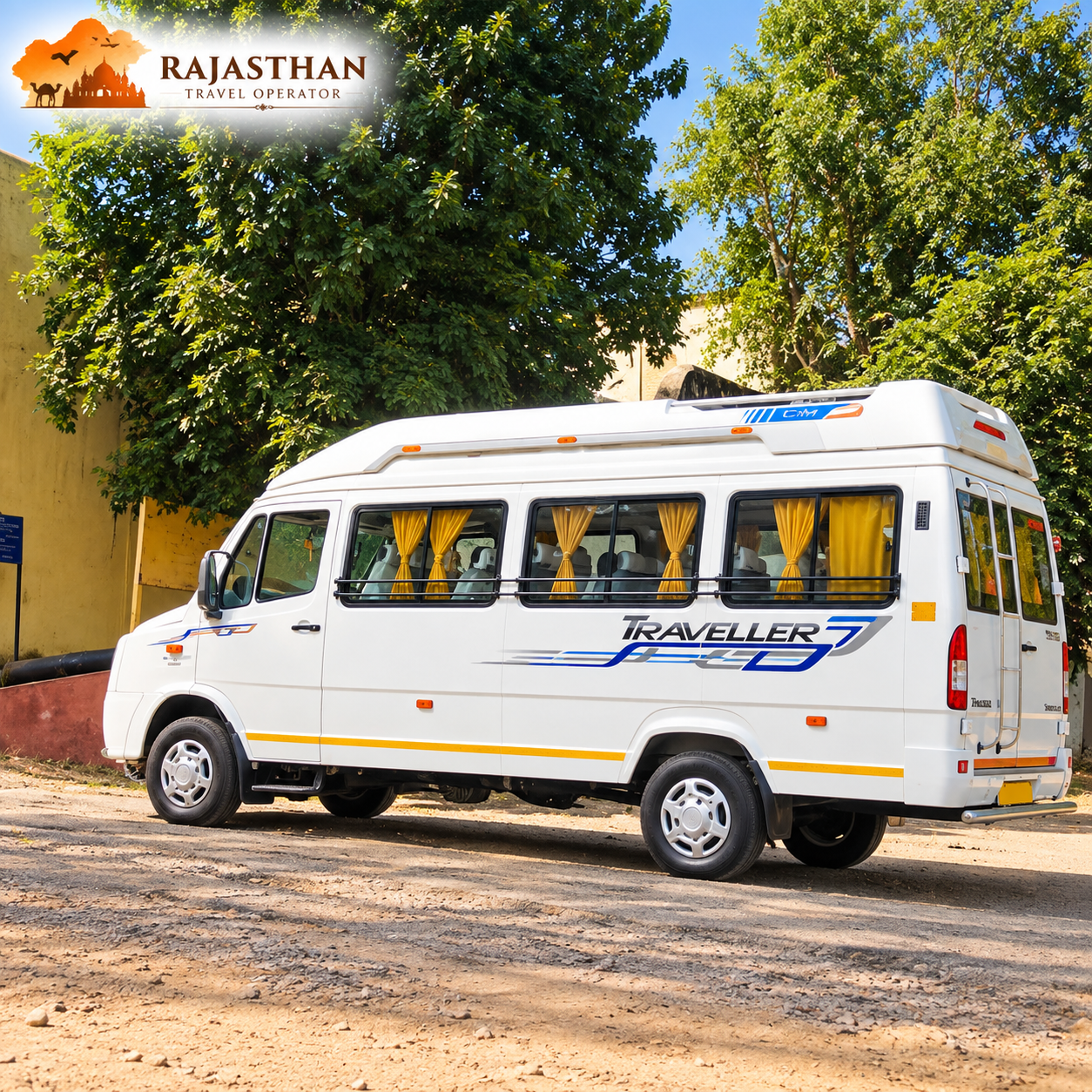
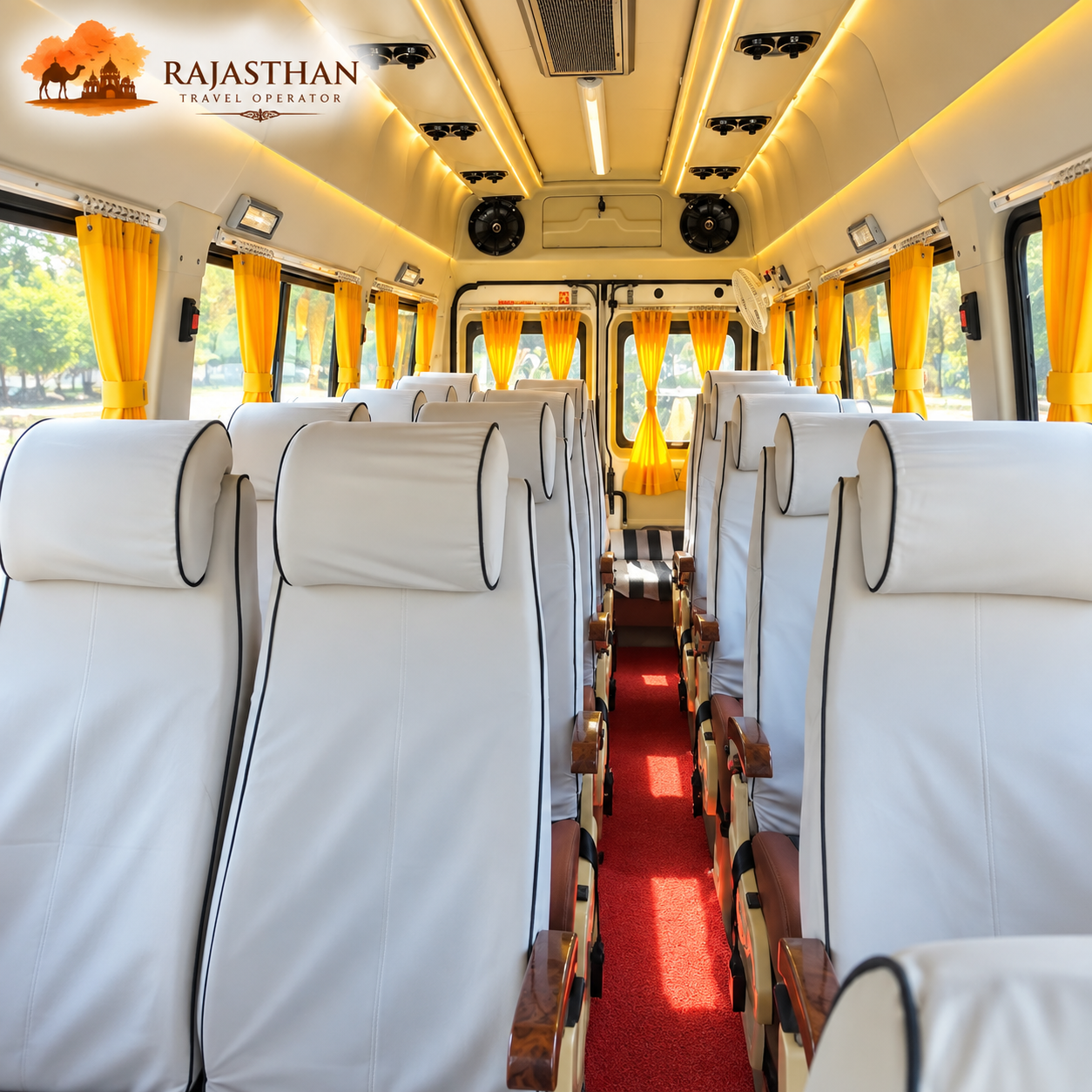
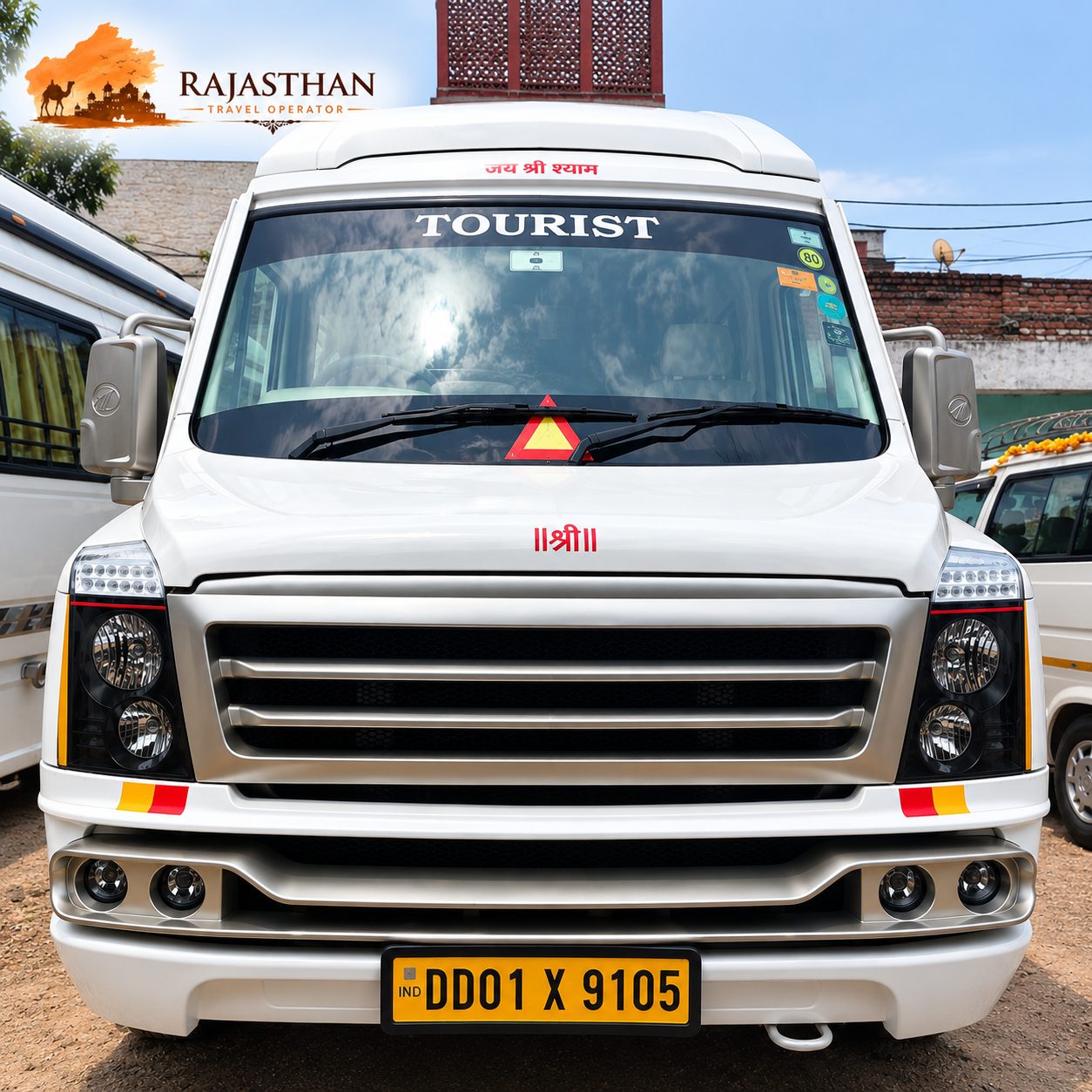
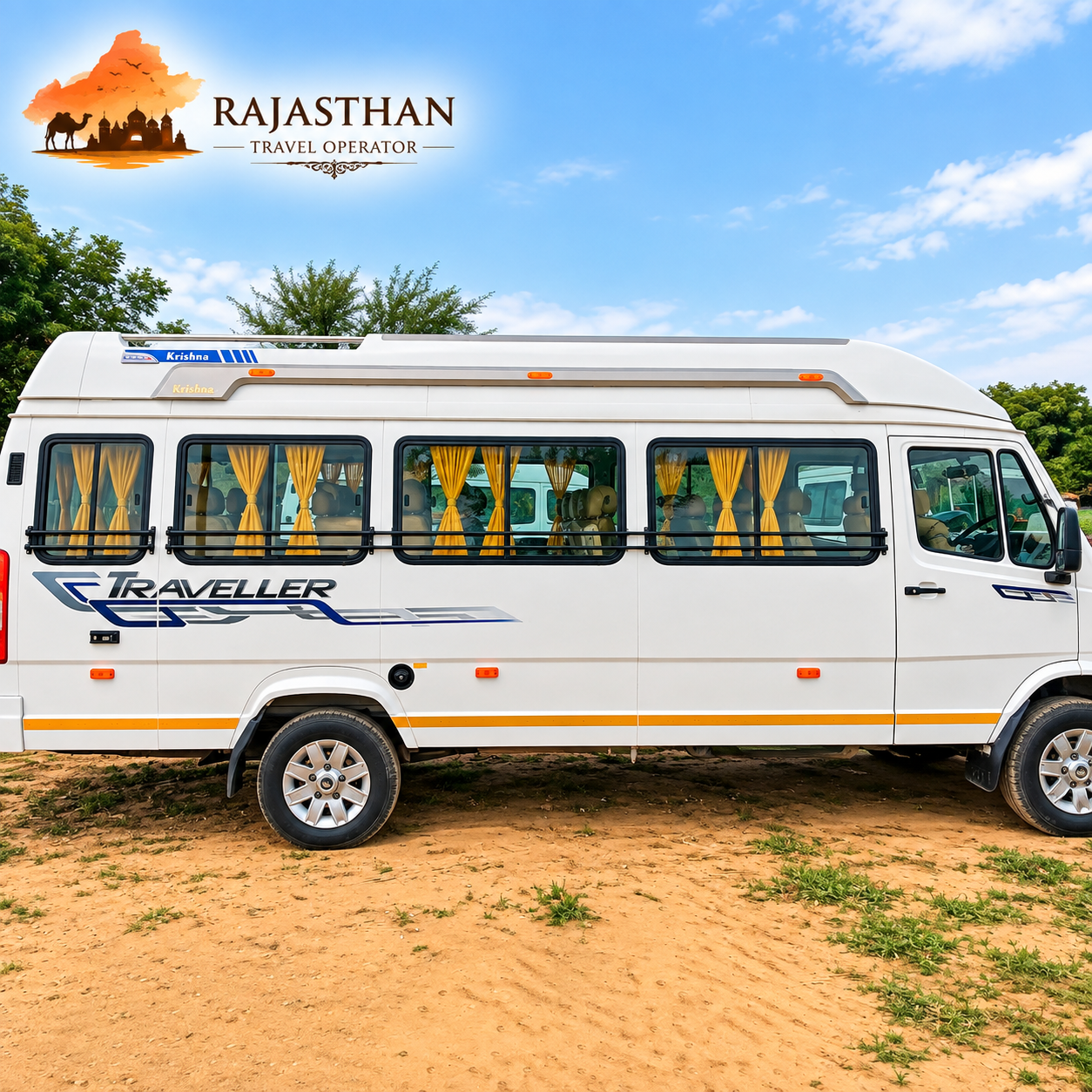
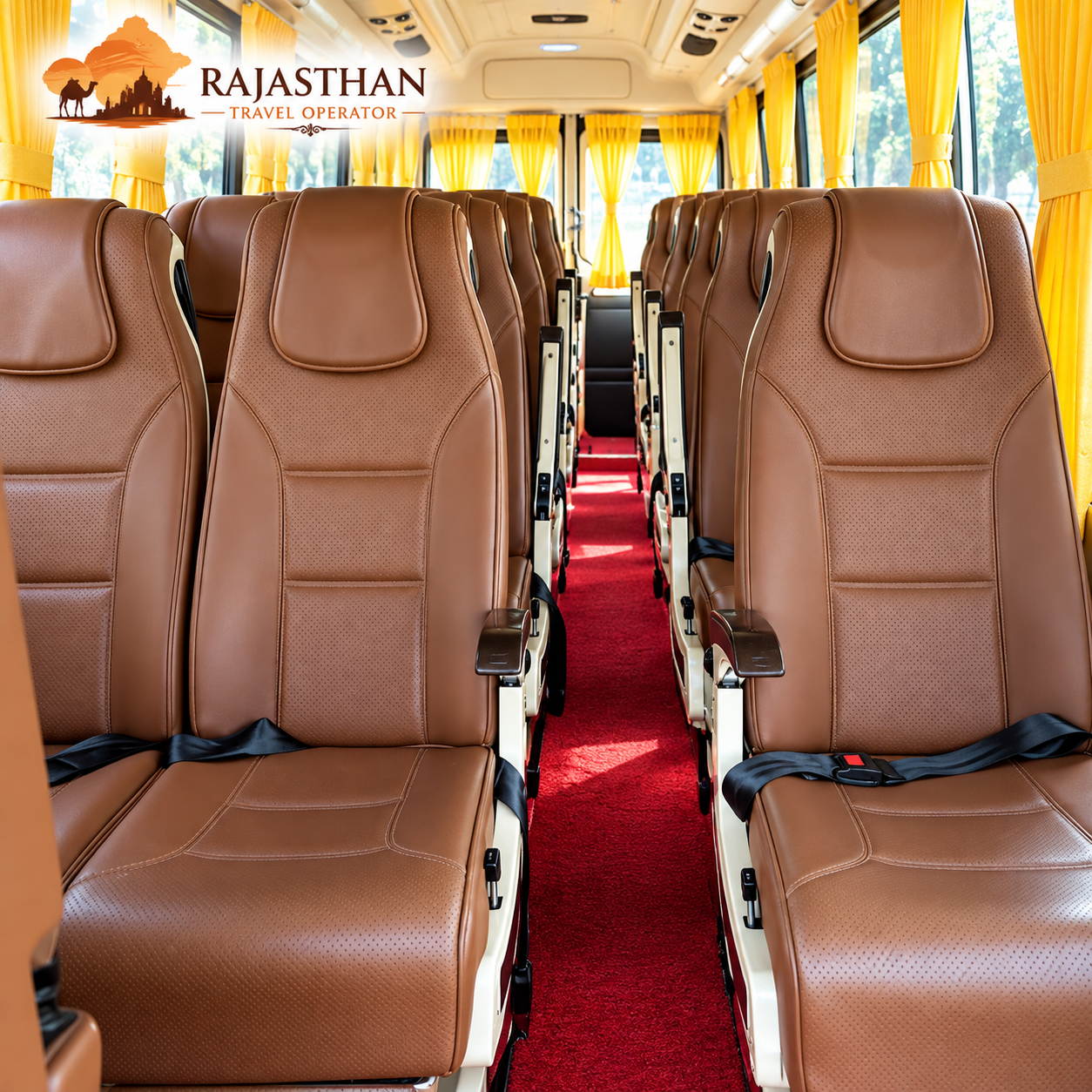
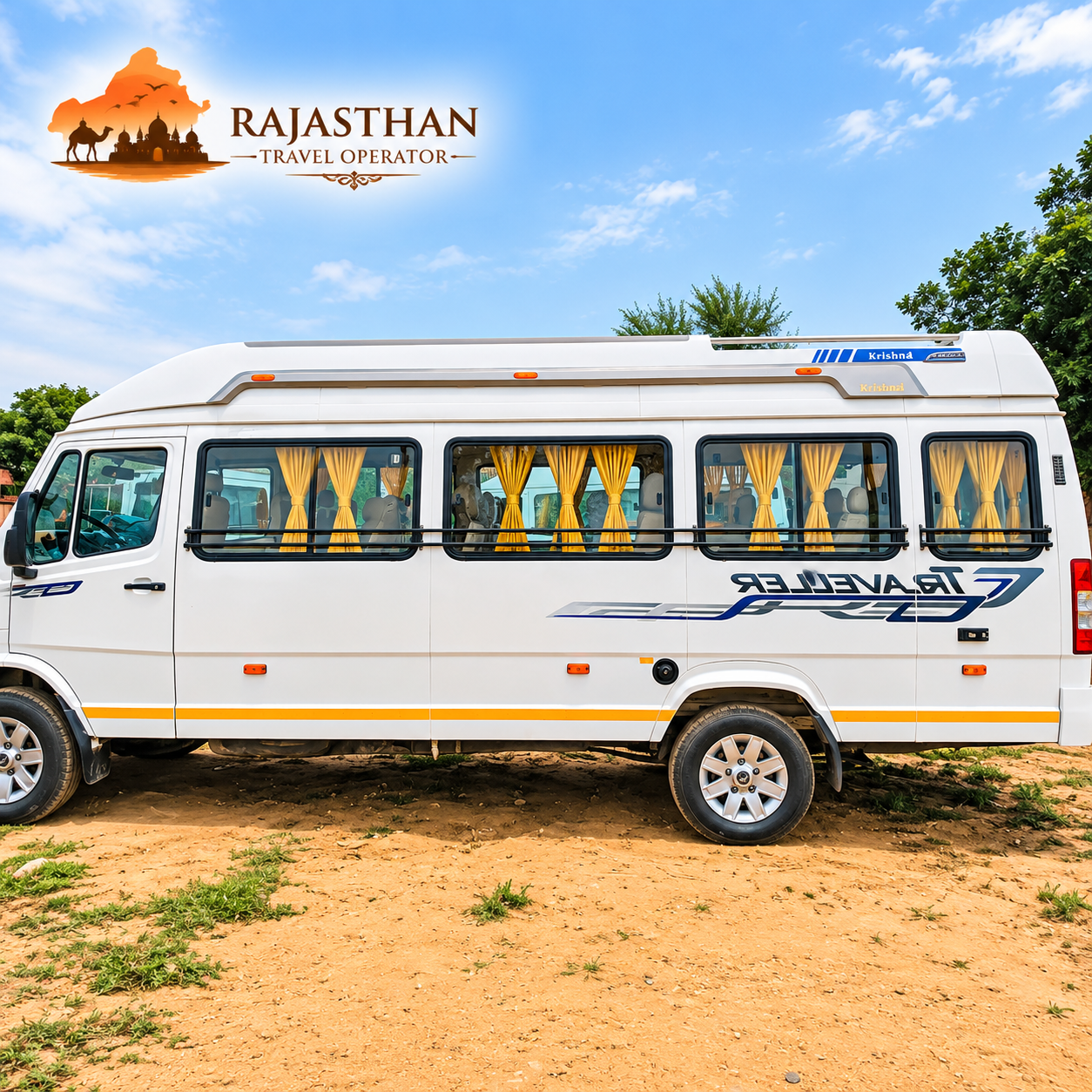
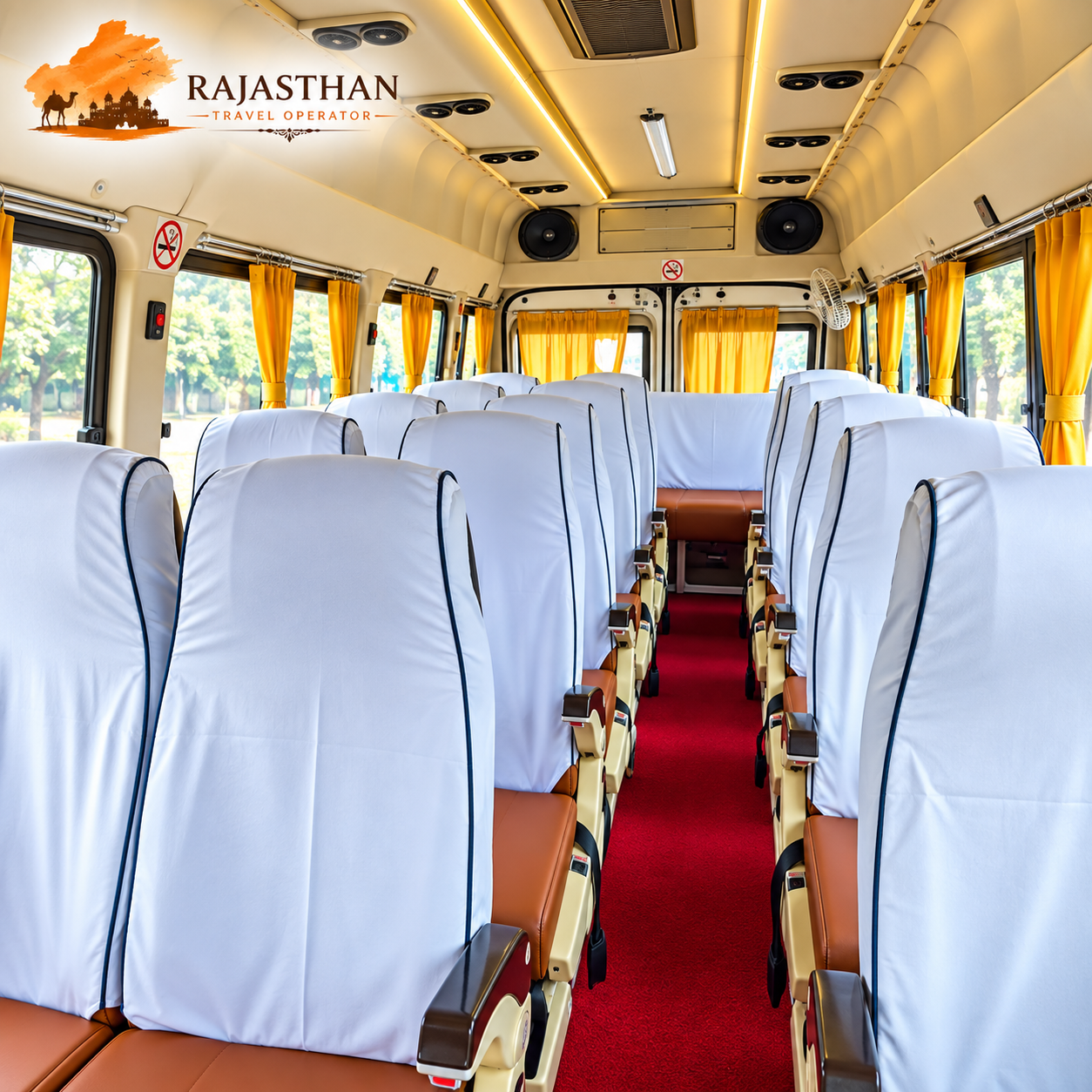
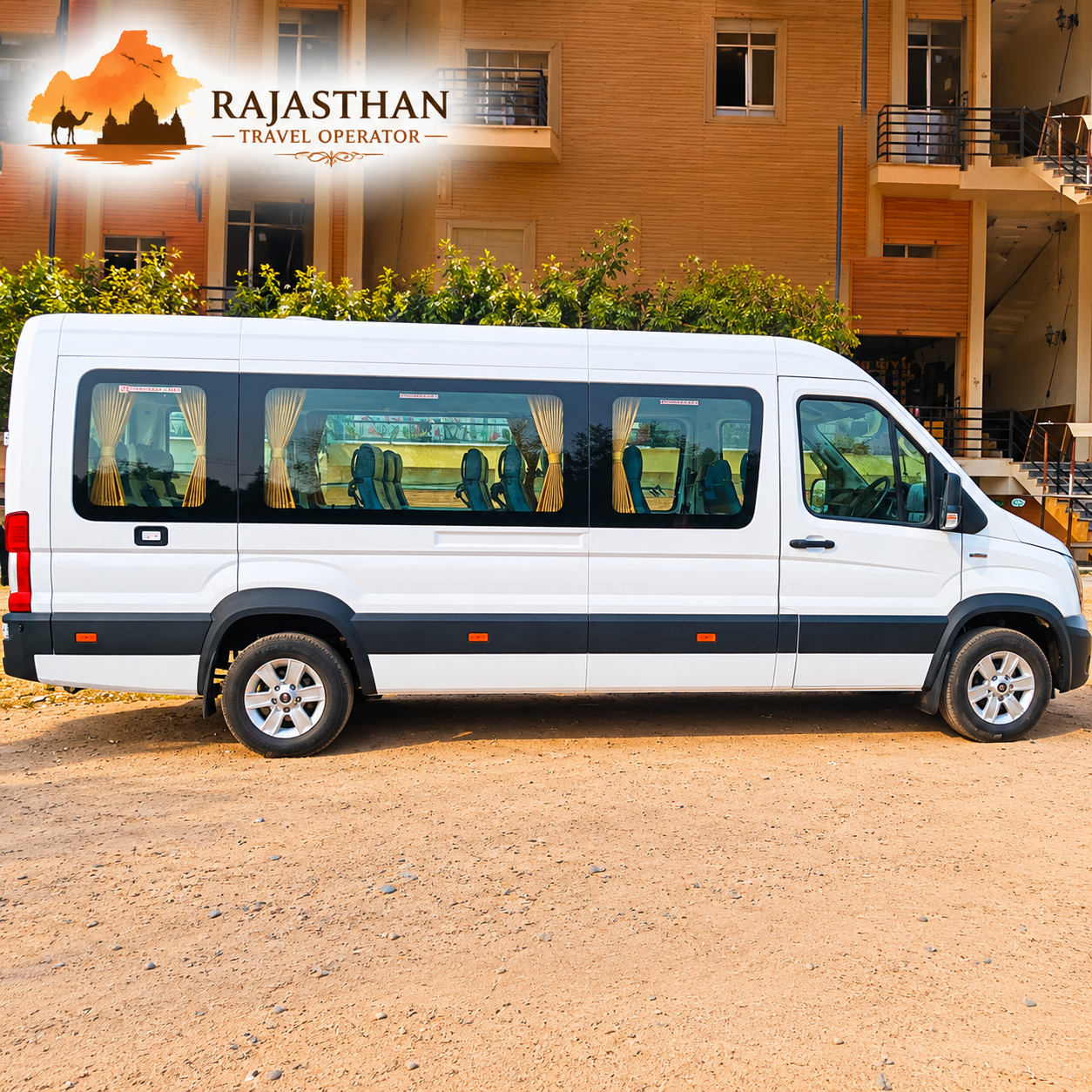
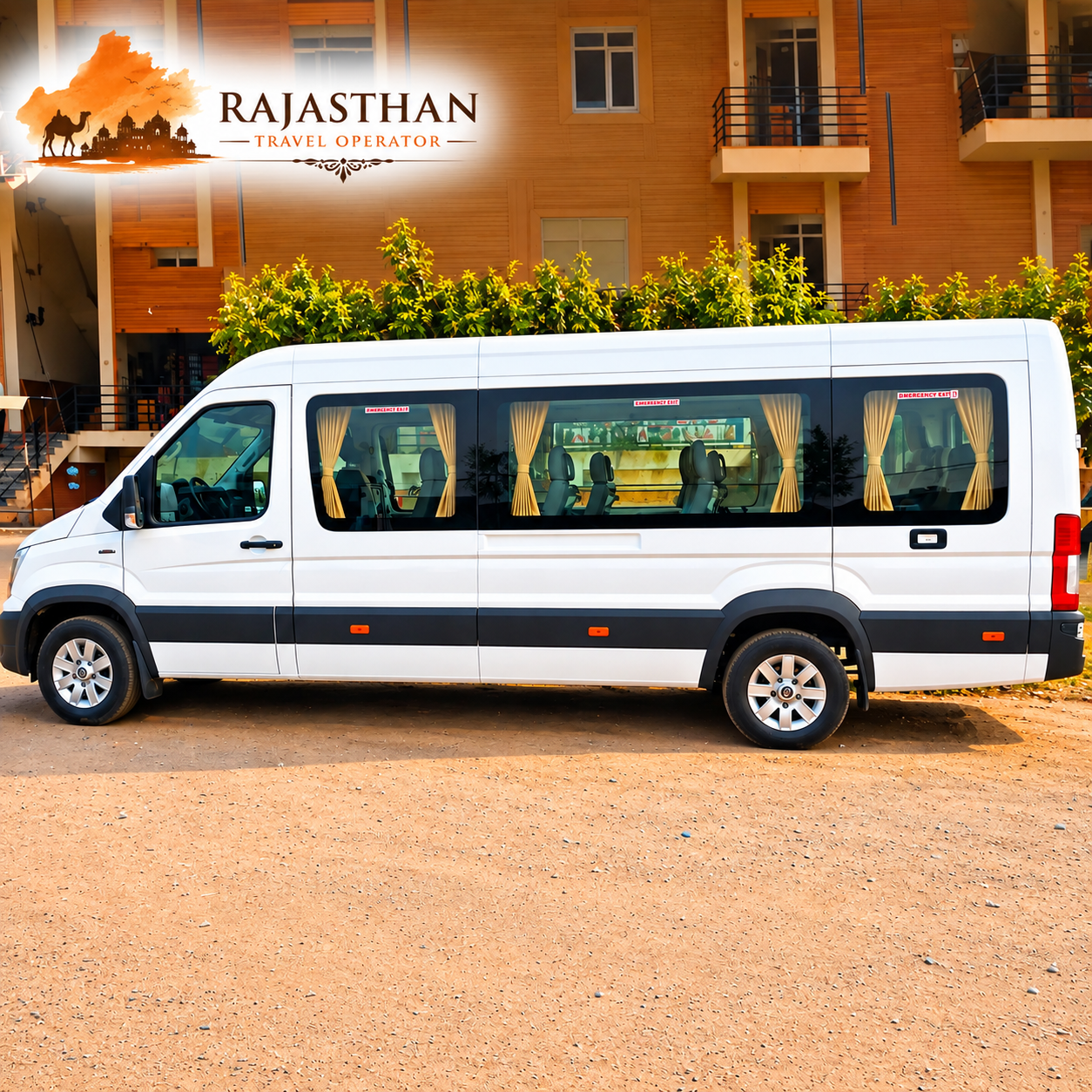
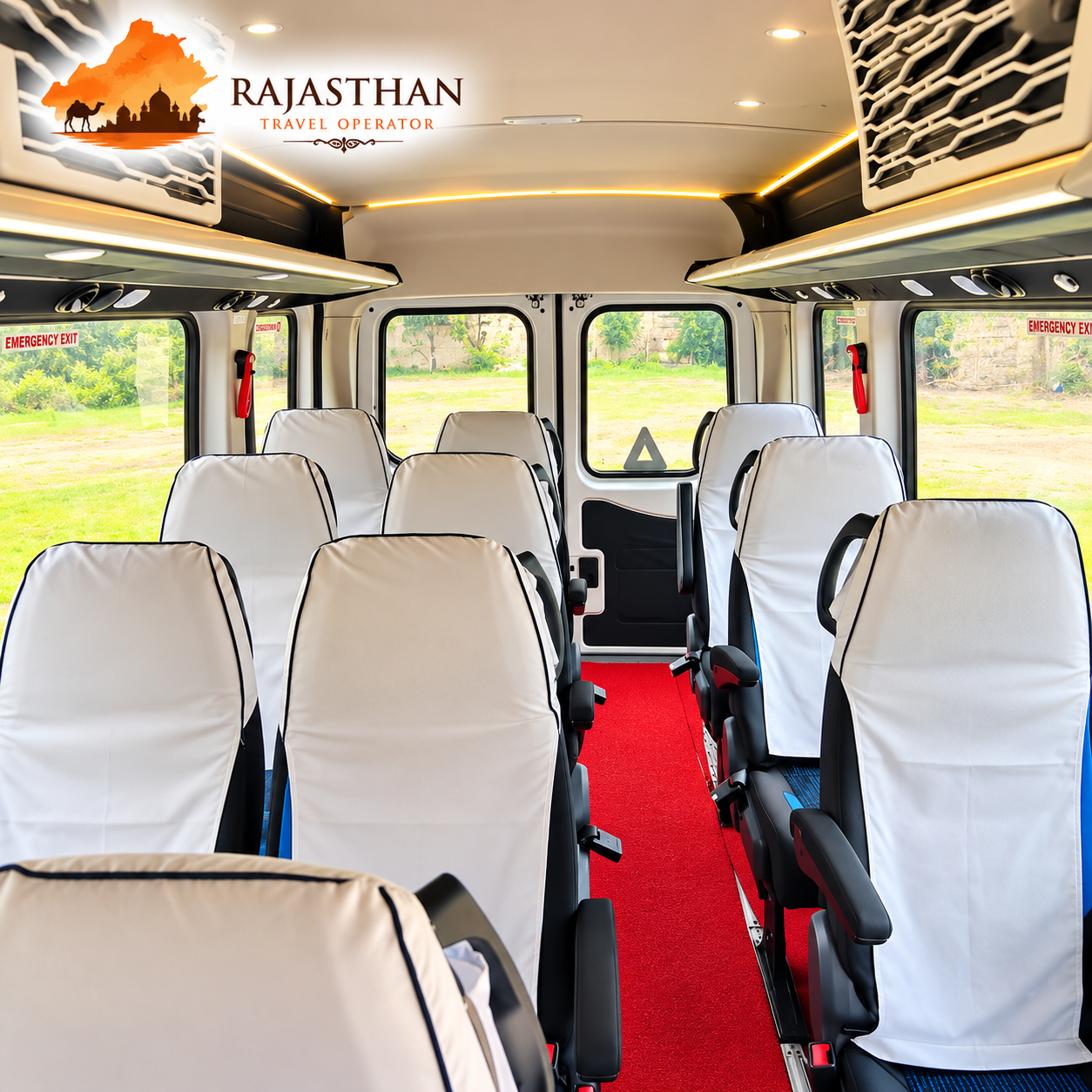
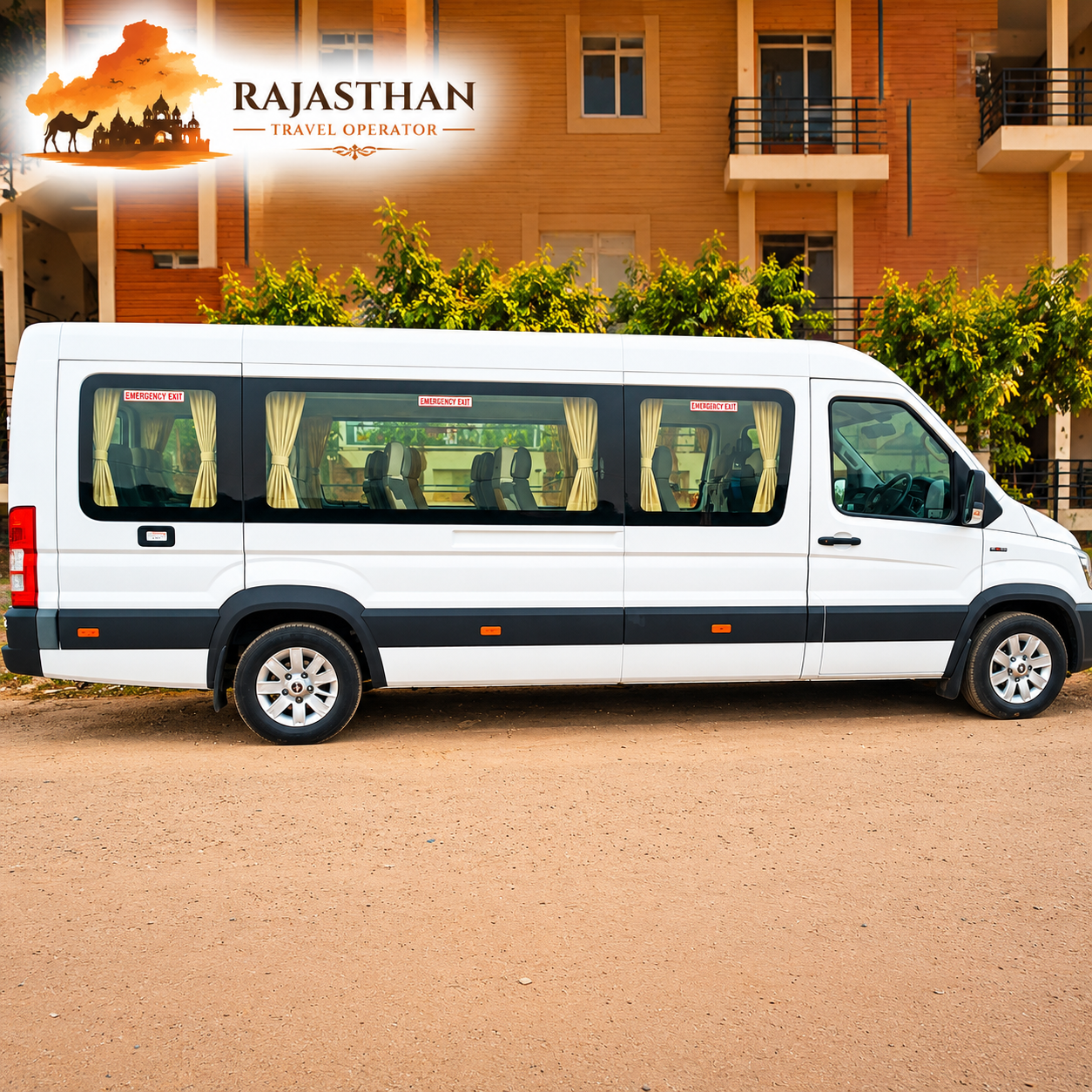
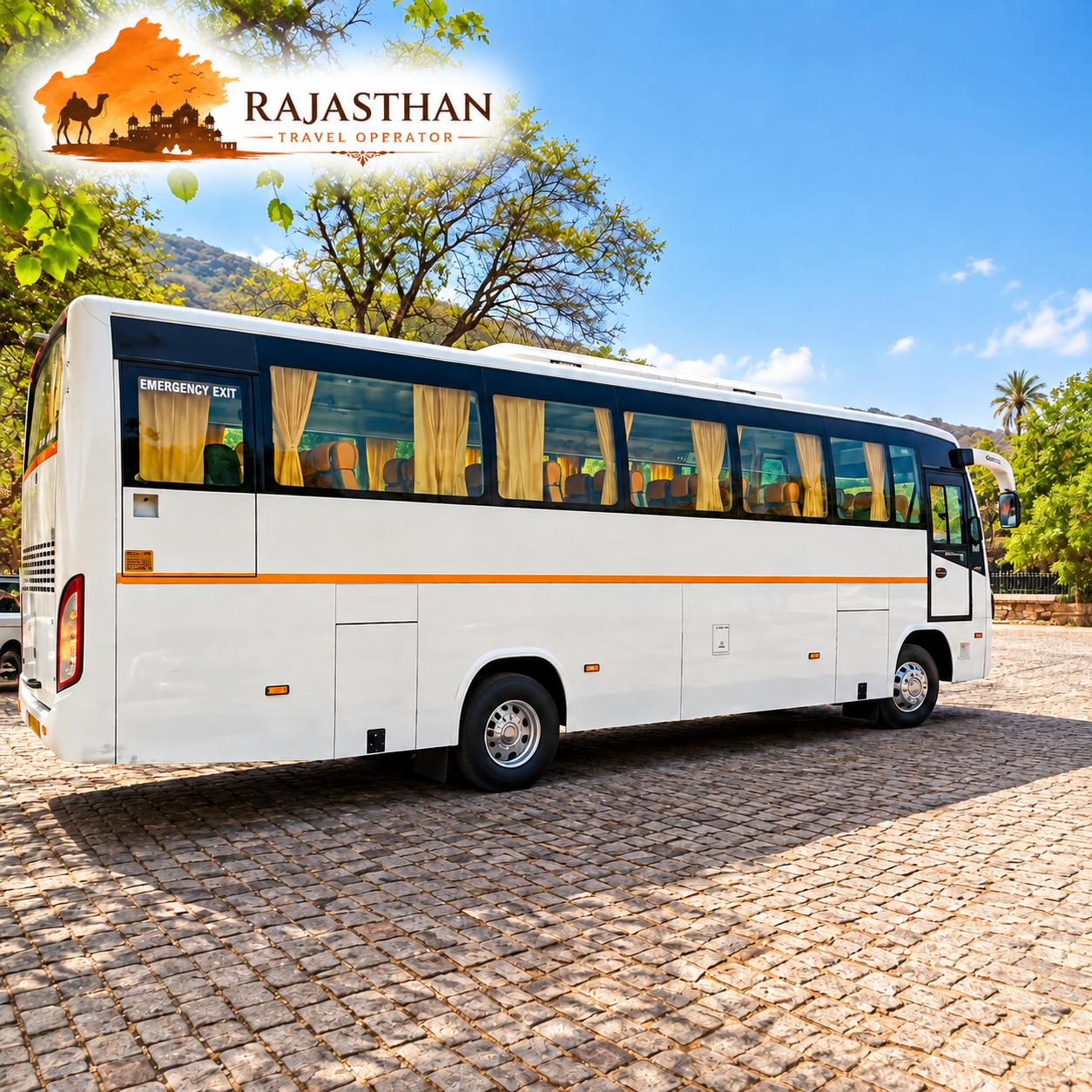
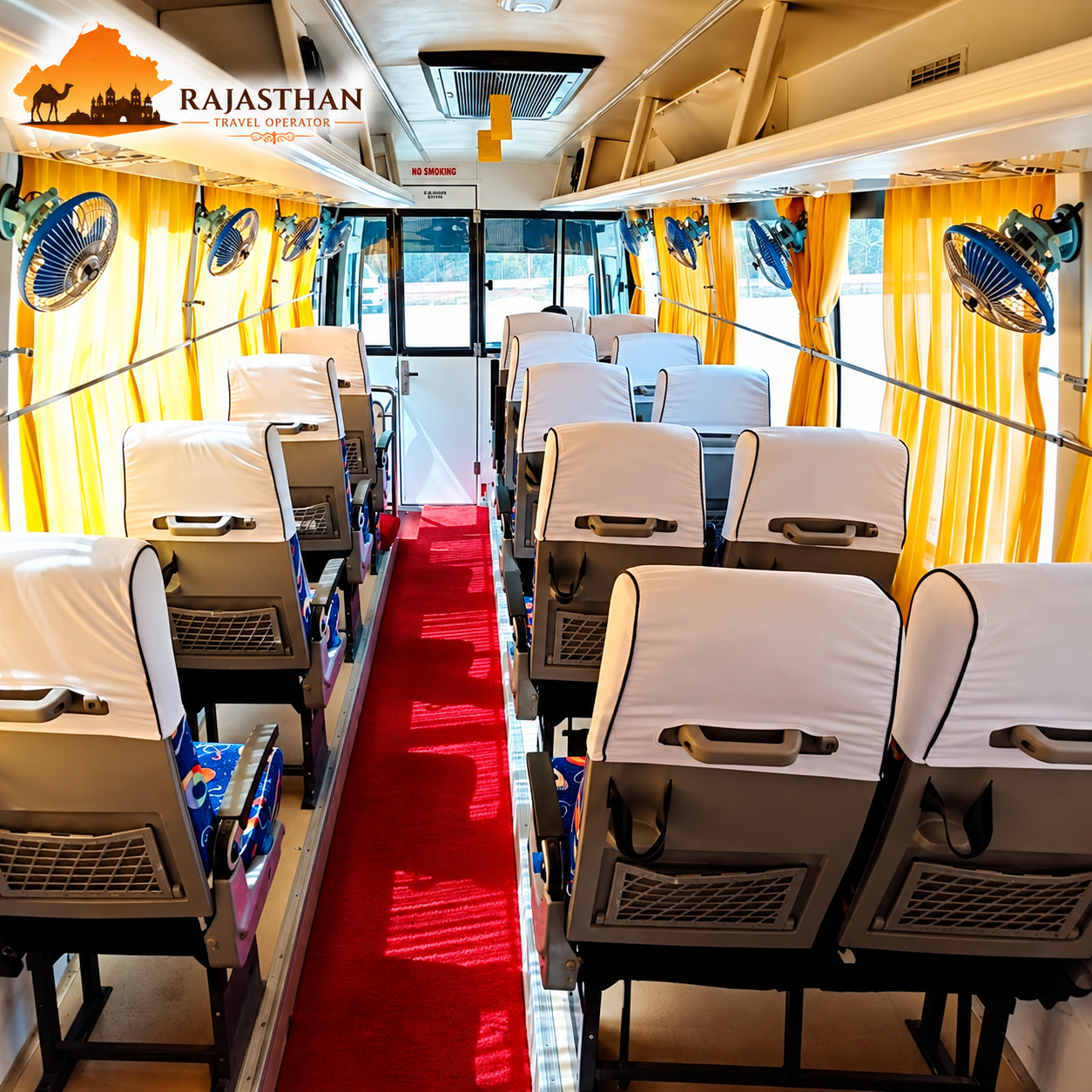
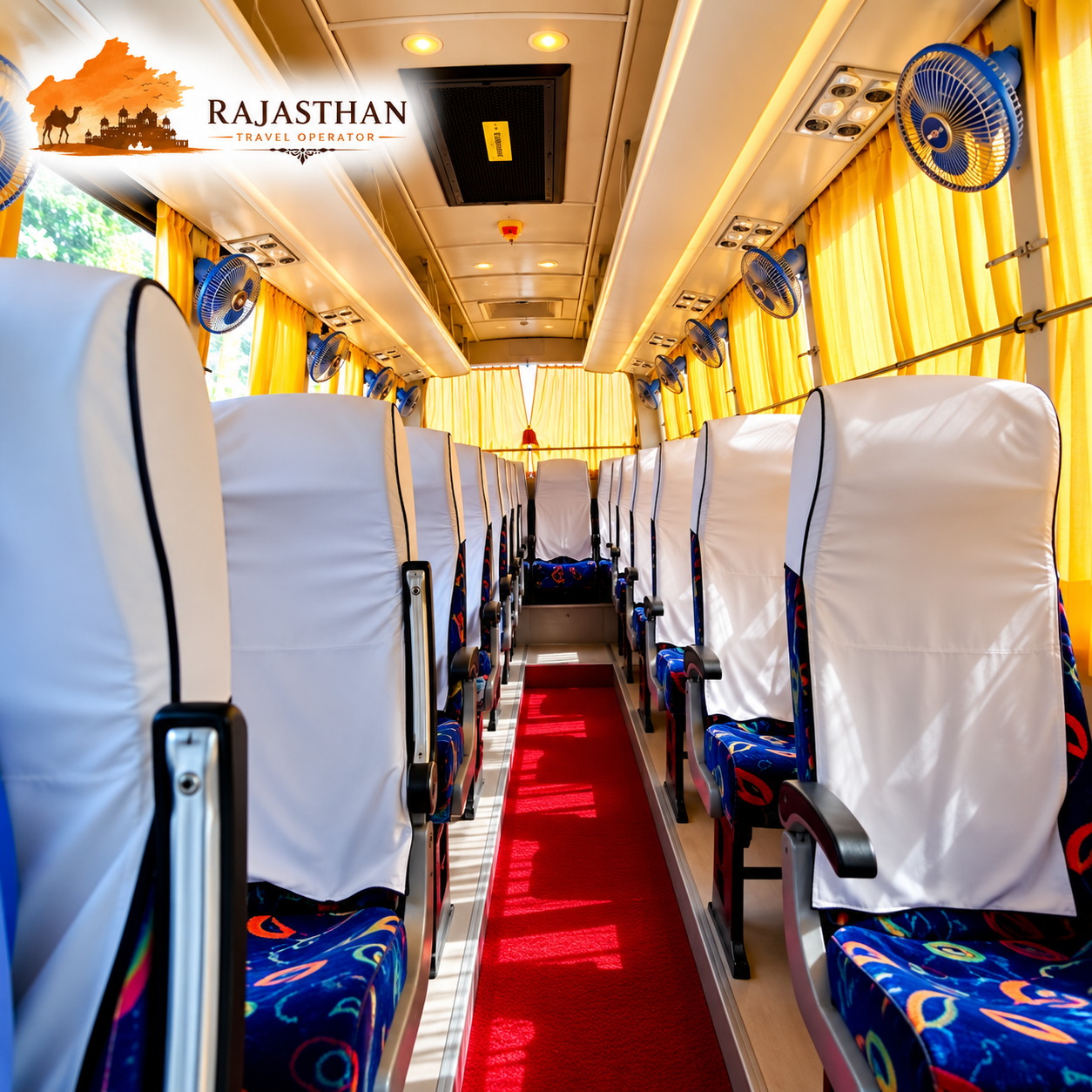
A single, purpose-built 20 seater running the largest standard body in most Jaipur fleets gives every passenger a predictable seat and layout for the whole trip. Two smaller vehicles can sometimes offer more room per person if the group divides evenly and each vehicle isn’t packed to capacity — worth considering if part of your group would genuinely benefit from a quieter, smaller vehicle, like elderly relatives who’d prefer a calmer environment separate from a livelier younger crowd.
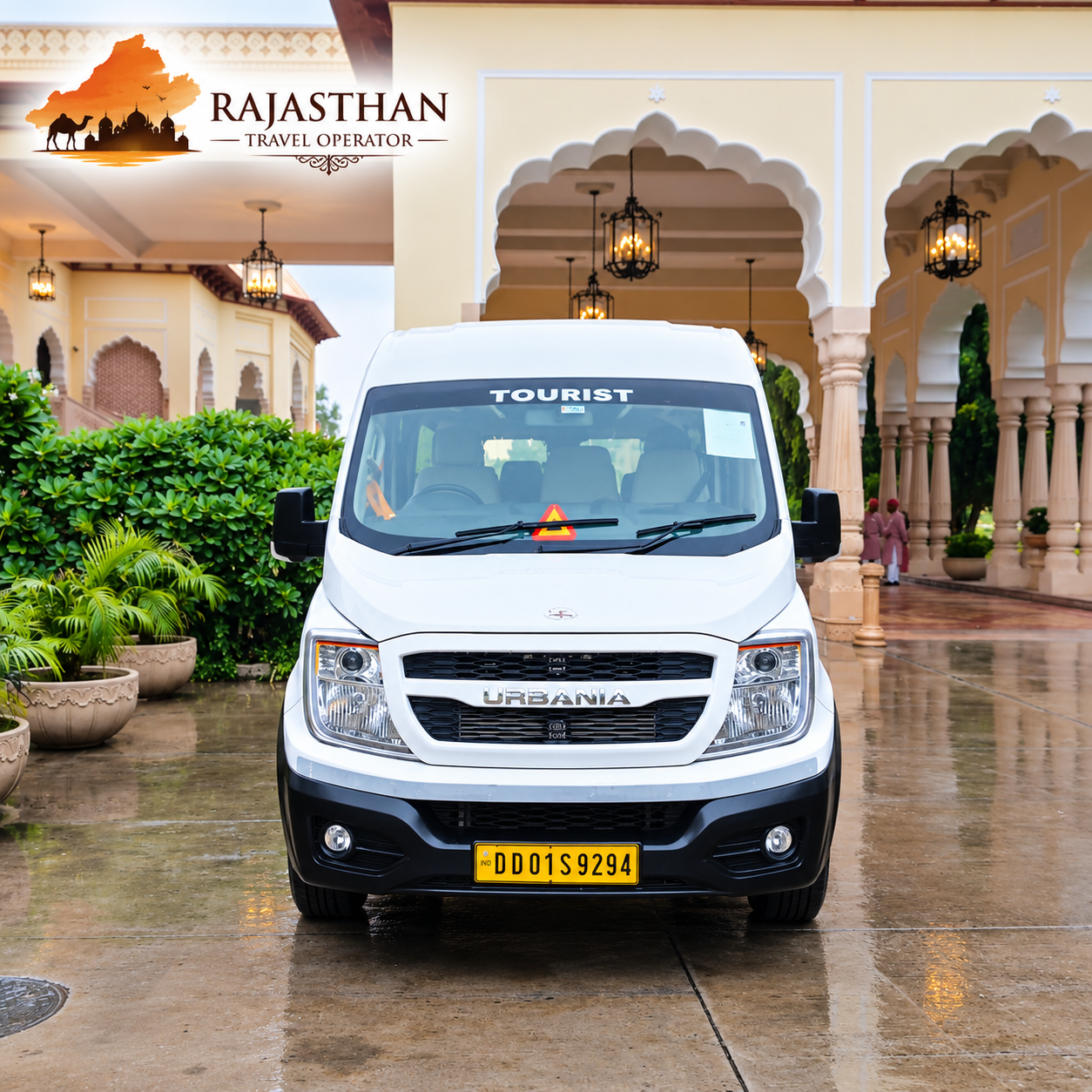
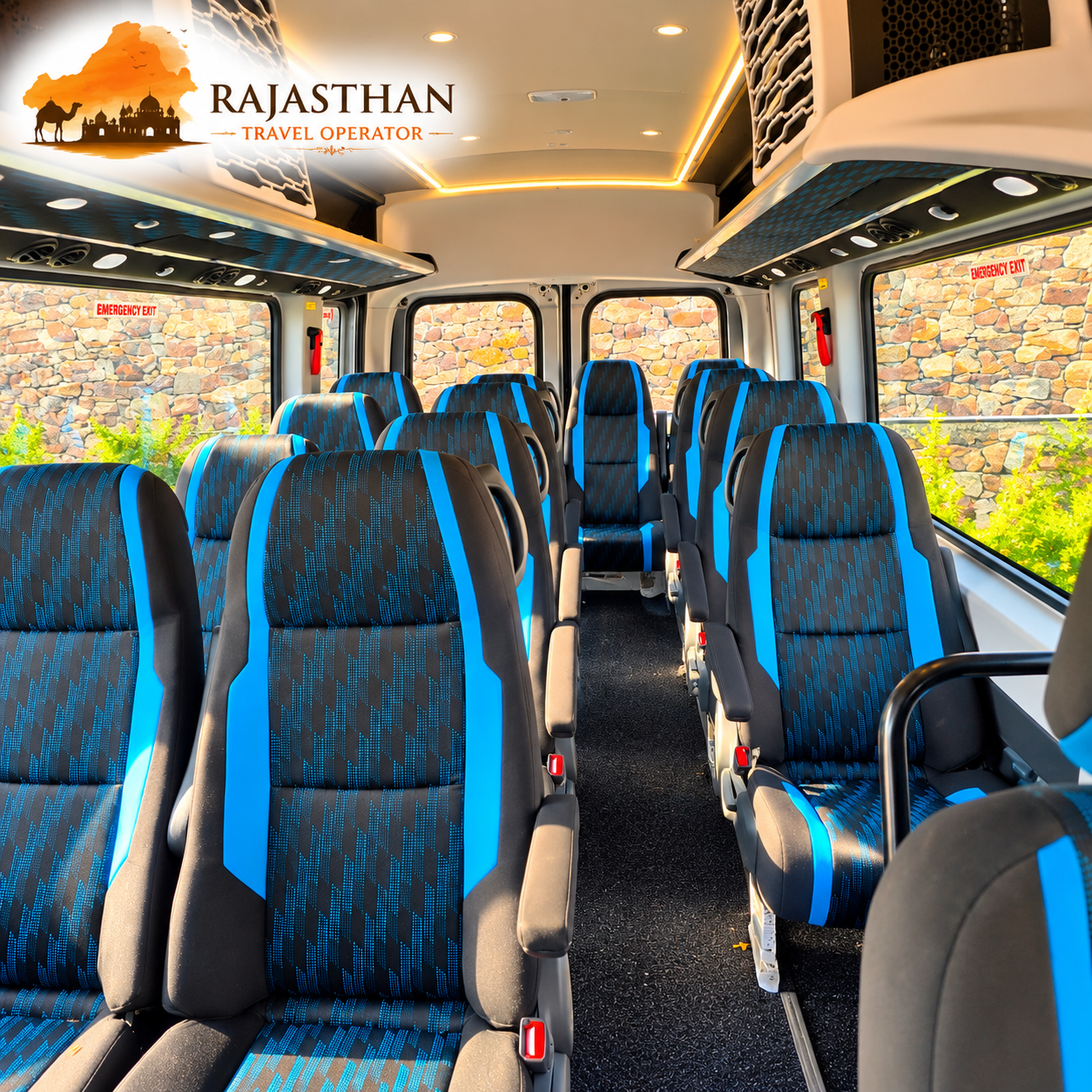
If comfort is genuinely the deciding factor rather than cost or coordination, it’s worth comparing a large single vehicle against a smaller premium option too — a 16 seater Urbania for eighteen or fewer, or splitting a subset of the group into a 12 seater Urbania for a quieter, smoother-riding smaller party while the rest travel in a standard large vehicle.
When One 20 Seater Clearly Wins
For a genuinely confirmed group of eighteen to twenty doing a real multi-day Rajasthan circuit — Jaipur to Jodhpur to Udaipur, or a full Golden Triangle loop — one vehicle wins on cost, coordination, and simplicity almost every time. It also wins decisively for any group that needs to arrive and leave together for a specific reason: a wedding party moving between venues, a corporate team arriving for a scheduled event, or a pilgrimage group timing arrival for a specific darshan window. Splitting into two vehicles for any of these scenarios adds real risk of the group not being together at the moment it actually matters.
When Two Smaller Vehicles Make More Sense
A short, local, single-day booking inside Jaipur with no luggage and a group that naturally splits into two sub-groups — say, an older and a younger contingent with different preferences for pace — is the clearest case for two vehicles. Narrower city stretches also sometimes favour smaller vehicles over one large body, particularly for stops in older parts of Jaipur where a longer vehicle has less room to manoeuvre.
It’s also worth considering two vehicles if your headcount is genuinely uncertain and might land anywhere from sixteen to twenty-two — booking a 16 seater tempo traveller and a smaller 10 seater tempo traveller as a flexible pair can sometimes absorb last-minute headcount changes more easily than a single fixed-capacity 20 seater, since one of the two vehicles can be adjusted or dropped if the final number comes in lower than expected.
A Simple Way to Decide
Ask three questions. Is your headcount confirmed and genuinely eighteen to twenty, or still uncertain — a confirmed number favours one vehicle, an uncertain one favours flexibility with two. Is the trip multi-day and multi-city, or short and local — multi-day strongly favours one vehicle on cost, short and local narrows the gap. And does the group need to stay together at specific moments — a wedding schedule, a darshan timing, an event arrival — or is the timing flexible enough that arriving separately wouldn’t matter.
If the answers point toward one vehicle, the 20 seater is very likely the right call. If they point toward flexibility, pricing out two smaller vehicles — perhaps a 12 seater hire in Jaipur paired with another mid-size option — is worth doing properly rather than defaulting to whichever felt more familiar.
Trim Matters Regardless of Which Way You Decide
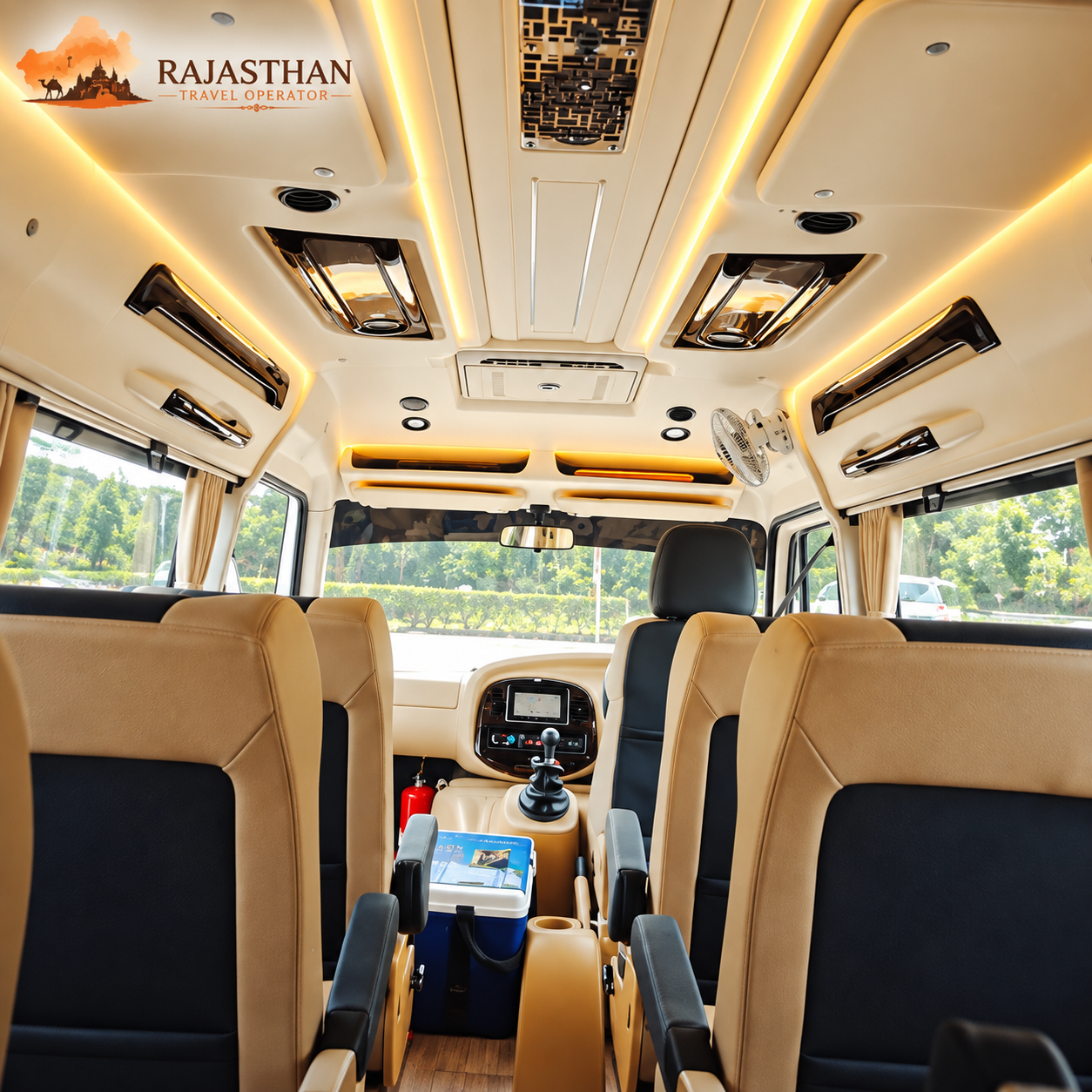
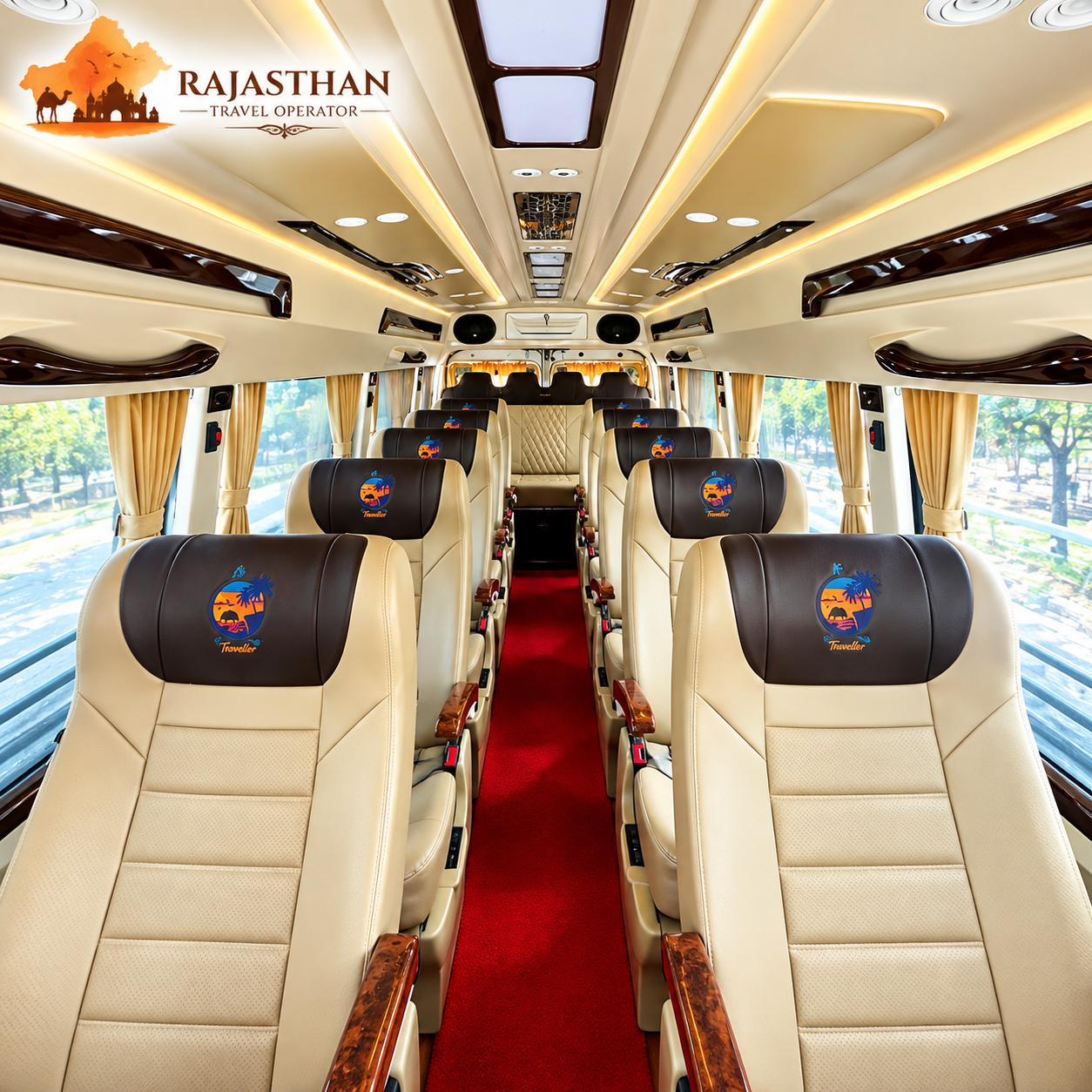
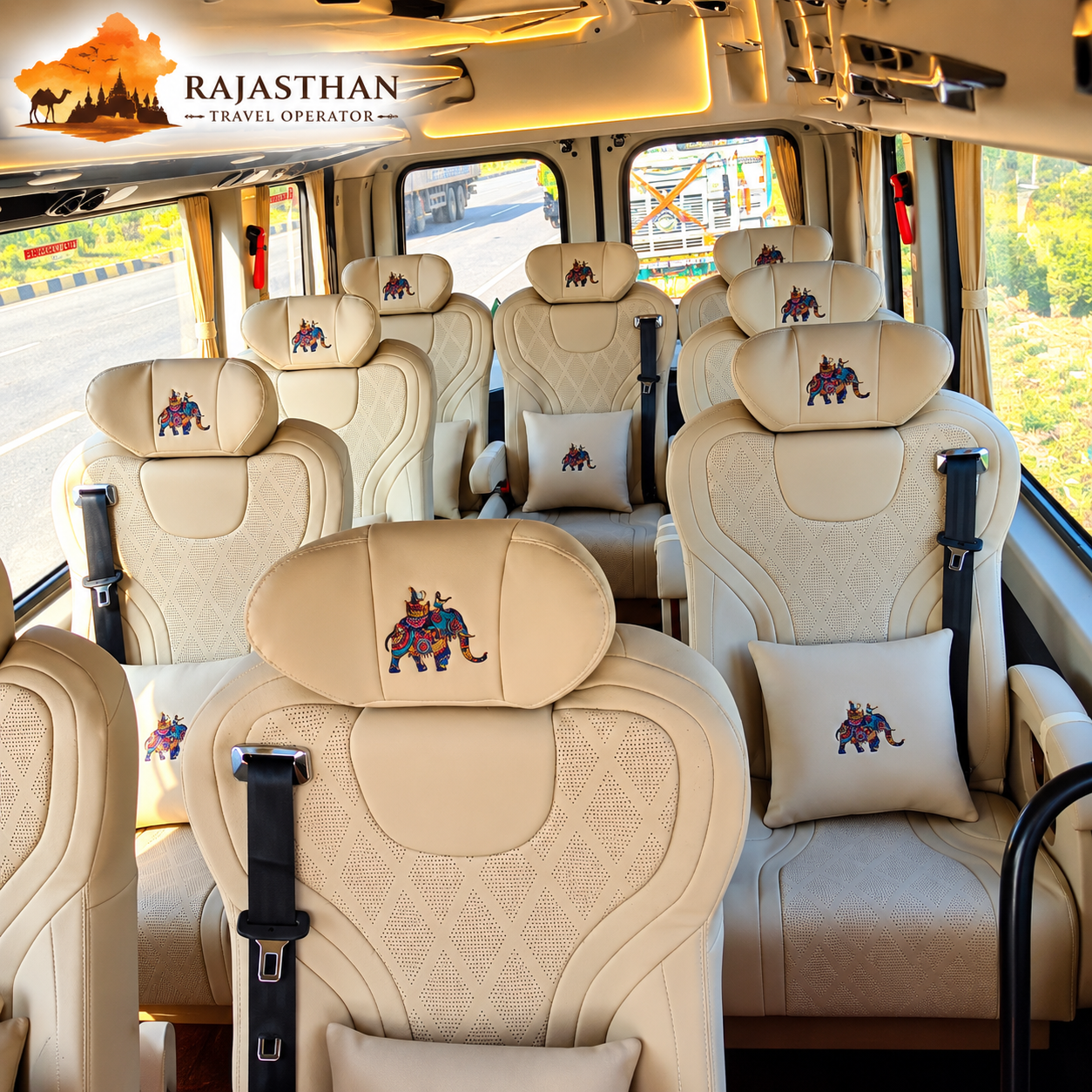
Whichever option you land on, trim shouldn’t be an afterthought. A luxury tempo traveller upgrade is worth the cost on either a single large vehicle or a pair of smaller ones, particularly for any multi-hour highway leg. If part of the group specifically needs extra space — elderly passengers, or anyone who’d benefit from wider individual seating — a Maharaja seat tempo traveller configuration is worth pricing for that subgroup, whether they’re travelling in the main vehicle or a separate smaller one.
For groups leaning toward the ride-comfort side of the decision entirely, it’s also worth checking the Urbania tempo traveller platform as a third option for a smaller sub-group within a larger event, since it offers a genuinely smoother highway ride at the cost of losing roof storage — a trade that might make sense for a comfort-focused portion of a bigger group even if it wouldn’t work for the whole booking.
Before You Decide — Run the Actual Numbers
Get a full all-inclusive quote for the single 20 seater option — base rental, driver allowance, night halt, tolls, and permits combined into one figure. Then get the same full breakdown for two smaller vehicles covering the same group and route. Compare the two totals directly rather than comparing base rates alone, since the gap is usually much smaller — or much larger — than the headline day rates suggest once every cost layer is included. Full comparisons across every size in the fleet are on the tempo traveller on rent page if you want to price out several combinations before committing.
Frequently Asked Questions
Is one 20 seater almost always cheaper than two smaller vehicles? For multi-day, multi-city trips, usually yes, since cost layers like driver allowance, night halt, tolls, and permits double when you split into two vehicles. For short local bookings, the gap narrows significantly.
When does splitting into two vehicles actually make sense? When your headcount is genuinely uncertain, when the group naturally divides into two sub-groups with different needs, or for short local trips where coordination overhead matters less.
Does splitting into two vehicles ever offer more comfort? Sometimes, if each vehicle isn’t packed to capacity — worth considering if part of your group would benefit from a quieter, separate environment, such as elderly relatives travelling apart from a livelier group.
What’s the biggest risk of choosing two vehicles over one? Coordination — two drivers, two potential delay points, and a real risk of the group getting separated at a stop, particularly relevant for any trip with a fixed arrival time that matters, like a wedding or event.
How do I compare the two options fairly? Get a full all-inclusive quote for each option, not just base rates, and compare the actual totals for your exact group size and itinerary before deciding.
Final Word
There’s no universally correct answer between one 20 seater and two smaller vehicles — there’s a correct answer for your specific headcount, route, and how much the group needs to stay together at key moments. Run the real numbers, weigh the coordination overhead honestly, and the decision that felt like a coin flip usually becomes clear once every cost and logistics factor is actually on the table.